Client
Institutional-Grade RWA Tokenization
Unlocking New Revenue Streams Through Institutional-Grade RWA Tokenization
Implemented advanced technology integration and performance analytics for an e-commerce business, improving website performance significantly.

Overview
Institutions across banking, natural resources, and carbon markets unlocked new revenue streams through compliant real-world asset tokenization.
Industry Context
Real-world asset (RWA) tokenization refers to bringing off-chain financial or physical assets onto blockchain infrastructure, enabling programmable ownership, faster settlement, and broader investor access.
For traditional institutions, several structural constraints persist:
Multi-day settlement cycles
Limited secondary liquidity for private assets
High intermediation and administrative costs
Restricted access to diversified capital pools
Complex reconciliation and reporting processes
Across banking, natural resources, and carbon markets, asset owners increasingly face capital efficiency pressures and demand for alternative financing structures.
Tokenization is not about speculative crypto exposure.
It is about modernizing asset infrastructure while preserving legal, regulatory, and operational safeguards.
However, for Web2 institutions, the barriers are significant:
Regulatory ambiguity
Operational integration complexity
Custody and governance risk
Technology readiness gaps
This is where structured advisory becomes critical.

The Aspiration
Across three distinct institutional contexts, clients aimed to migrate real-world assets on-chain while upholding rigorous institutional standards.
Unlock new revenue streams from underutilized assets
Improve capital efficiency
Enable faster and more transparent settlement
Expand investor access beyond traditional funding channels
Maintain strict compliance and governance standards
Impact
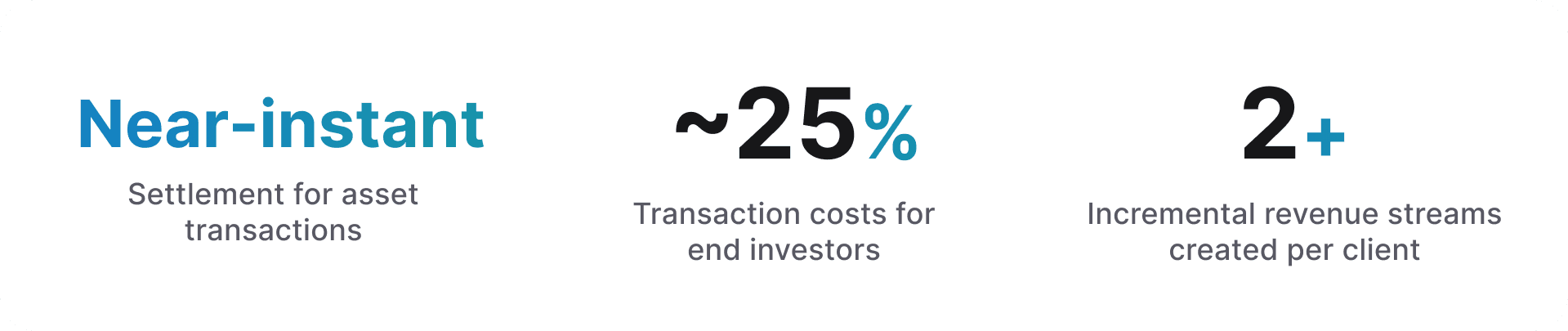
These outcomes were enabled through compliant tokenization frameworks aligned with asset cash flows, governance requirements, and enterprise systems. By integrating economic design, risk management, and operational readiness, clients established repeatable models that can scale across additional assets and markets.
Strategic Mandate & Execution
We delivered tailored tokenization strategies aligned with each client’s asset structure, regulatory environment, and operational readiness.
1. U.S. Retail Bank – Tokenized Deposits
The bank sought to explore tokenized deposit instruments to enhance settlement efficiency and expand digital asset service offerings.
We:
Mapped end-to-end banking flows
Identified eligible deposit use cases
Designed a compliant token issuance structure
Structured custody and reserve management mechanisms
Built a risk and compliance framework aligned with U.S. regulatory expectations
Defined governance and reporting requirements
2. African Mining Company – Tokenized Exclusive Mining Rights
The mining operator held exclusive rights to extract mineral assets but faced financing constraints and exposure to macroeconomic cycles.
We:
Structured a tokenization model linked to real asset cash flows
Designed financing protocols tied to production output
Built infrastructure to support investor onboarding
Developed risk controls aligned with asset delivery schedules
Structured investor access pathways to private asset exposure
3. Carbon Credit Platform – Tokenized Voluntary Carbon Credits
The platform required a compliant tokenization architecture aligned with environmental registries and third-party verification standards.
We:
Designed the tokenization framework tied to verified carbon credits
Built registry integration flows
Structured carbon retirement and audit processes
Developed compliance checklists with third-party verification requirements
Architected the data layer for traceability and transparency
Related Capabilities
Web3 & Digital Asset Strategy
RWA & Stablecoin Design
Interested in similar results for your organization?
Find out more.

Schedule a Strategy Session
Available virtually worldwide or in person at our New York headquarters.

New York Headquarters
340 Madison Ave, New York, NY








Schedule a Strategy Session
Available virtually worldwide or in person at our New York headquarters.
New York Headquarters
340 Madison Ave, New York, NY
Schedule a Strategy Session
Available virtually worldwide or in person at our New York headquarters.
New York Headquarters
340 Madison Ave, New York, NY